
NOVEMBER 7: JOSHUA ROBKE (No video available)
"ABSTRACTION AND EXPRESSIONISM"
In the 1940’s art historians and critics began to infer from the “temporal coincidence” of abstract painting and the special theory of relativity that Albert Einstein had influenced a whole swath of modern art. But Einstein’s ideas did not gain either acceptance or cultural authority until after these pre-WWI art movements had already begun. Though many painters at the time did express more than a lay interest in physics, their concern was with its broader issues at the turn of the century: X- rays, energy and atoms.
Mr. Roebke talked about how these topics influenced certain schools of modern art in the first decade of the 20th century, including what he believes is the first direct link between physicists and painters during this time. He also talked about what it meant for both art and science to be considered “abstract.”
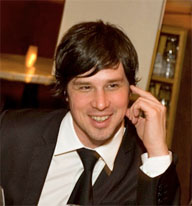
Joshua Roebke was born in a very small town in Ohio and raised in an only slightly larger town in Michigan. He studied nuclear physics and Spanish Literature at Michigan State University and received a Master’s degree in theoretical high-energy physics from McGill University in Montreal. In 2005 he dropped out of his Ph.D. and moved to Brooklyn to become a writer. He is now a Visiting Scholar at the Office for History of Science and Technology at UC, Berkeley and lives and writes in San Francisco. He is at work on his first book, about physics in the 20th century, called The Invisible World.